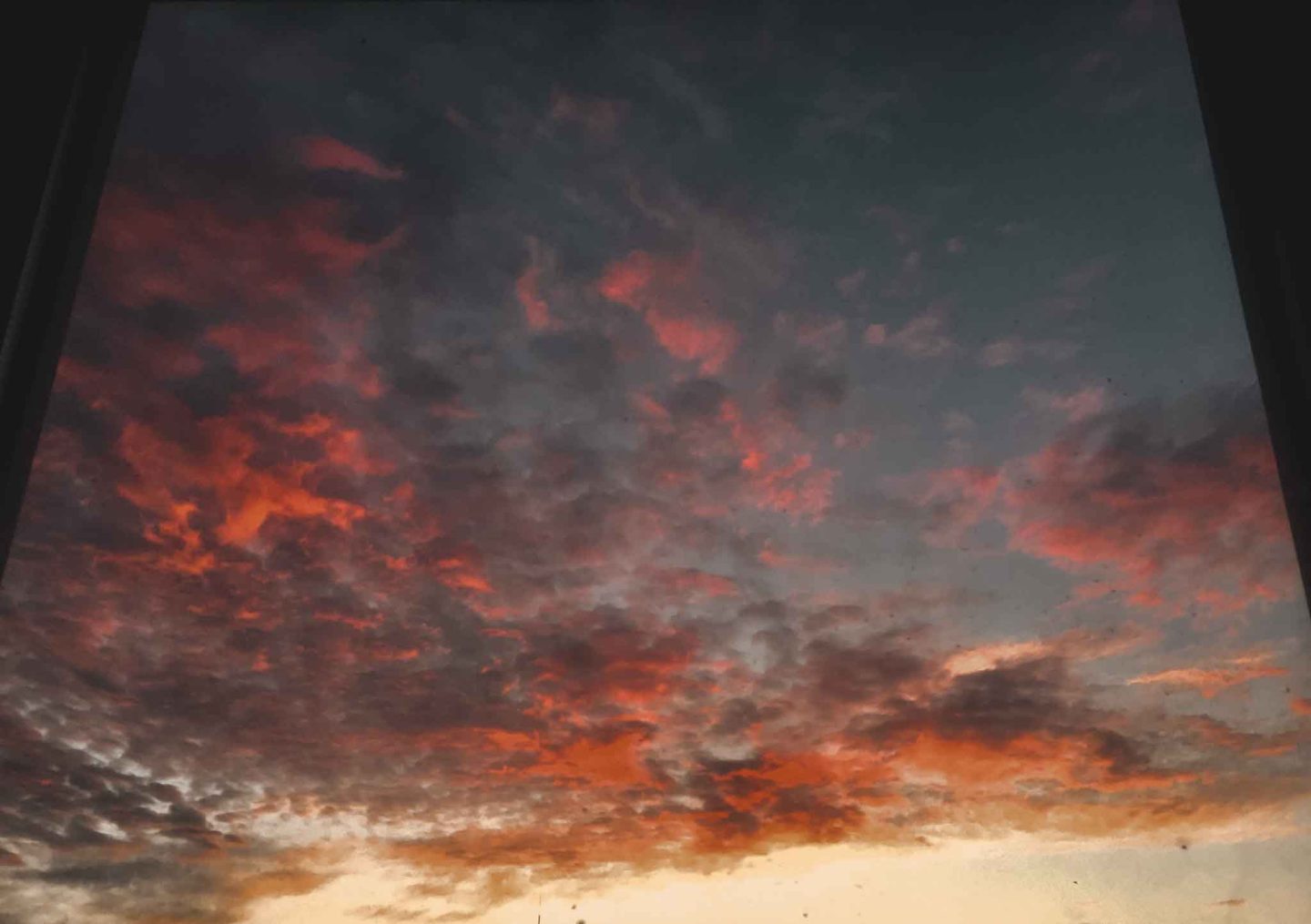
Photo taken in Lisbon, Portugal
Thin Line
I’ve always been a bit scared of heights. Ever since I could remember, a combined jolt of adrenaline and trepidation would instantly sweep through my body while traversing any overpass suspended by only three stories high.
It’s pathetic, I know. But I try not to let it stop me. So far, it hasn’t, and I’ve always managed to get to the other side.
This time, however, I’m about to try something different. This time, it really feels as if what I’m attempting to do is achieve the impossible.
While I’m not talking about a literal bridge in this case, the topic I plan to delve into seemingly resembles the ultimate high-wire act. Except, instead of it taking place within the sheltered confines of a tented circus, the tight rope of which I’m metaphorically referring to hangs thousands of feet in the air with no net to catch me if I fall.
Okay, there’s a chance I’m being a tad dramatic. Maybe it’s not that serious. Still, in my mind’s eye, the difficulty is not unlike that of French artist Philippe Petit’s famous high-wire walk between the colossal skyscrapers of New York City.
I share all of this because what I’m about to talk about is no easy feat. Decade after decade, just the sound of the name itself continues to spark an uproar of emotions and opinions on either side of the debate.
So I imagine that alongside my crossing comes the inevitable intensity and passion from onlookers beneath me, standing along opposing edges of the thin line I aim to navigate. Nevertheless, as polarizing as this subject can be, I know without an inkling of doubt in my bones how deeply important it is, not just to me personally, but to a great number of people.
This is something that needs to be talked about more. Time and time again, prominent figures strived to shed light on its significance, only to stumble in explaining its potential and value.
As advocates erred with their forceful, extreme approach, a backlash erupted, leading to a deepened misunderstanding that only increased from an enraged demoralization and taboo by those serving political agendas. A moral panic ensued, tainting the topic with words like “reckless misuse,” and the rest is history.
Thankfully, we are a long way from all of that. Thankfully, people are a lot more open-minded in this present day and age about things they know nothing about.
More and more research is coming to the surface on the benefits of something that was always judged so poorly; something that was invented by a distinguished scientist in Switzerland—a little chemical compound we now know today as LSD.
Tech Boom
It’s not uncommon for any one of us to categorize whatever matter we come across based on what we see at first glance. Naturally, the more we encounter anything, the more we begin to make associations and draw all sorts of conclusions about it.
When left unchecked, it’s only likely for these views to strengthen with inflexibility over time. Sooner or later, an unquestionable judgment is made, and for some, there’s just no chance of changing it; as soon as such a mind is set, that’s that—end of discussion.
What doesn’t help is the kind of misinformation out there that only induces fear and ignorance. Ill-humored images and scenes designed to ridicule and devalue any validity only dampen the truth about LSD.
Historically, its use goes back to the original pioneers of the 50s and 60s, when researchers, psychiatrists, and writers first saw its potential in revolutionizing mental healthcare. That is, before it became even more popularized by the counterculture movement.
So it’s no surprise that its influence eventually spread to neighboring areas of the region, including the one and only Silicon Valley. It is publicly known that early tech innovators, founders, and engineers used LSD to enhance their problem-solving skills, increase their productivity, and break away from conventional thinking patterns.
During the tech boom, workers and entrepreneurs credited its direct impact in fostering out-of-the-box thinking, including its contribution to innovative software and hardware design. Today, as it is locally decriminalized in several Bay Area cities, microdosing is considered a long-standing trend for supporting focus and creativity without the experience of hallucinations.
With the rising number of champions for psychedelics, more and more resources funded by tech executives and venture capitalists are being put into research, startups, and therapy platforms aimed at legitimizing substances for mental health. In Walter Isaacson’s biography of Steve Jobs, the late visionary and pioneer once said:
“Taking LSD was a profound experience, one of the most important things in my life. LSD shows you that there’s another side to the coin, and you can’t remember it when it wears off, but you know it. It reinforced my sense of what was important—creating great things instead of making money, putting things back into the stream of history and human consciousness as much as I could.”
Out of the Maze
Beyond inventiveness, one of its benefits is its ability to help people access deep emotional awareness about themselves. Needless to say, as challenging as it already is to deal with the ongoing shuffle of life’s unpredictable events, it gets even harder to do so with inner, entrenched blocks.
In many ways, it’s almost as if they keep you trapped in your own personal maze, holding you back from a deeper connection with others. But the research on LSD reveals its effectiveness in disrupting these ingrained cognitive patterns, temporarily allowing one to step out of the maze and see what it’s like with an unburdened, newfound state.
So it’s no wonder that artists in creative fields have used it to heal from their pain following the experience of a heightened state of flow. With their emotive style and individual expression, creators across genres have credited their recovery to a flash of insight they received from psychedelics.
Without it, how many works of art would cease to exist at this very moment? How many art forms, from stories to poems to songs to works of literature, would have brought about the emotional impact they’ve had if one’s condition hadn’t been rehabilitated in the first place?
In The Doors of Perception, Aldous Huxley wrote:
“To be shaken out of the ruts of ordinary perception, to be shown for a few timeless hours the outer and the inner world, not as they appear to an animal obsessed with survival or to a human being obsessed with words and notions, but as they are apprehended, directly and unconditionally, by Mind at Large—this is an experience of inestimable value to everyone and especially to the intellectual.”

Breaking Patterns
One investigative piece exploring the recent revival of LSD and psychedelics is the work of Michael Pollan, an award-winning journalist, author, and professor at U.C. Berkeley.
In his book, How to Change Your Mind, he embarks on a quest to shatter the stigma and cultural panic of the past while bringing to light modern scientific research on each substance. In it, he documents his personal guided experiences with professionals and dives deep into the lessons he gained about consciousness, death, addiction, depression, and transcendence.
For me, one of the biggest takeaways is the eye-opening case studies on how the compounds are used to heal others, particularly successful psychotherapy treatments for patients with trauma and PTSD. Moreover, far from being an addictive substance as some falsely assume, Pollan’s work reveals how LSD can actually treat addiction itself.
He delves into this phenomenon using a “shaking the snow globe” metaphor, describing the addictive state of mind as a snow globe that has settled. Yet researchers highlight how LSD shakes up this fixed rigidity, allowing the brain to reorganize and break away from habitual automatic patterns of thought and behavior.
Last but not least, the renowned journalist emphasizes the importance of “set” and “setting” for a safe, transformative, and meaningful experience. This includes being in the proper mindset, having the right intentions, and ensuring a supportive space with or without professional supervision.
In doing so, he argues that it can help bring about the reset effect many people credit for expanding their perspective on life, along with a renewed respect and appreciation for their well-being and that of others. In his book, Pollan wrote:
“Maybe to be in a garden and feel awe, or wonder, in the presence of an astonishing mystery, is nothing more than a recovery of a misplaced perspective, perhaps the child’s-eye view; maybe we regain it by means of a neurochemical change that disables the filters (of convention, of ego) that prevent us in ordinary hours from seeing what is, like those lovely leaves, staring us in the face.”
Gentle Recalling
As I reach the end of my rope, clammy hands and all, I’d like to descend from my balancing act soon after describing the view I see from up here. But perhaps it’s no different from what others can already make out for themselves down below.
I mean, everything is visible, should anyone decide to look out over the horizon and catch sight of what’s happening all around us. At least, in my eyes, it’s hard not to notice the number of people surrounding me in parallel to where I stand, treading carefully across their own thin wires.
Hundreds of thousands of tightrope walkers are not difficult to distinguish from a distance, a number that’s growing every day. People are sharing and following their curiosity about this subject, which we can hardly deny, considering the rise of TED talks, podcasts, books, and content out there.
From my field of vision, it seems as if a renaissance is taking place, a comeback meant to address a real need, especially when it comes to our mental health as a whole. Thankfully, the scientific community is actively looking into how something so deeply misunderstood could serve a genuine, vital importance, not solely for recreational reasons, but for actual transformative medicine.
As paradoxical as it sounds, our technological advancement seems to have pushed our mental capacity to such extremes, and the cure we’re looking for lies hidden where we once lived as a species. Because, synthetic or not, the reality is that the experience these compounds give you can be found in our natural environment, out there in the wild.
And if I’m being honest, it’s hard not to see the irony in all of this. Because what could be more ironic than the fact that the very force behind our outward expansion is the same one guiding us back inward—back to what we might have overlooked in the beginning?
That the very thing that took us away from ourselves might now be calling us home? This is why, like Pollan, I’m grateful for his findings on the value of a restorative reset from a single snapshot.
Perhaps that’s all it really is, a chance to get a glimpse of our original state, back to who we once were before our societal ego took over and layered our lives with its grand plans of what’s important; a return to what was and to an understanding of something we always felt but could never put into words.
Maybe it’s the kind of realization that gets us asking how silly we are, complicating what is already so damn simple and so damn beautiful on its own; a truth that doesn’t arrive as an answer, but as recognition—the gentle recalling of what we’ve known all along, waiting for us to open our eyes so we could once and for all, set ourselves free.