Photo taken in Fern Canyon, Humboldt County
No Shoes, No Service
Of all the places I would move to, I could never have predicted that I’d experience homesickness in my tiny college town of Arcata. The mere idea sounds laughable considering that it only took me a four-hour drive up Highway 101, its location situated in the heart of Humboldt County, not far from the Oregon state border.
There’s a common understanding that the Bay Area, where I’m from, belongs to the Northern region of California, a widely accepted identifier that I still struggle with to this day. For more than basic geography, there’s a reason why I take a different view on this.
I emphasize the distinction because, beyond the modern corporate offices of Silicon Valley, past the cluster of Victorian houses of San Francisco, you might find yourself veering up the Pacific Coastline and into the windy beginnings of a completely different world. You’ll know you’ve reached it from its rugged rural landscape filled with lush green valleys, wide curving rivers, and the famous redwood forests with trees you can drive under, their width so large that you can easily fit a comfortable living room within.
To me, this is the true North. This is Humboldt—a place where I went to school and unexpectedly encountered culture shock for the third time in my life, purely due to one reason alone: it’s straight up weird. But I mean that in the best way.
The truth is, the county has a singular character and personality because of its rich history of thousands of hippies settling in the area following the civil rights movement. With zero corporations and chain stores, the city of Arcata continues to preserve its liberal, environmental, and community values, protecting local shop owners and small businesses as a testament to its “Corporations Are Not People” ordinance.
The town was my first introduction to ethical shopping, composting, veganism, and appreciation for nature. At the time, so much of this was new to me, which is why I went through an adjustment period without the familiarity of the typical retail blocks and shopping malls that reminded me of home.
In a lot of ways, it felt like I was going to college in a different decade with remnants of the 60s floating about around me, all difficult to ignore. How could you pretend otherwise next to people wearing colorful tie-dye shirts, styling their hair in dreadlocks, and drinking from foggy, old mason jars?
I can still vividly recall the lingering smell of incense, the millionaire cannabis farmers in their retro cars, and the iconic Volkswagen vans that got me thinking of the counterculture movement, along with their fireside gatherings, intimate concerts, and painted peace signs. I remember the first time I came across someone walking around barefoot, deliberately ignoring our cafeteria signs that read: “No Shoes, No Service.”
In my eyes, this particularly cheerful individual was clearly high on weed and craving the munchies that it was impossible not to picture a certain character from The Lord of the Rings.
My Precious
If I’m being honest, J.R.R. Tolkien’s beloved fantasy series is nowhere near the top of my list of favorites. But I understand the allure.
There’s no denying the impact of Tolkien’s brilliance and world-building genius that continues to resonate across generations. Clearly, its mass appeal speaks for itself.
Nevertheless, it was too intense for me as a kid. Needless to say, I could hardly find Gollum’s breathtaking smile or Saruman’s captivating gaze in line with my personal taste of fictional characters.
It wasn’t until years later, when I would rewatch the extended version of all films back to back, that I came to ponder the hidden meaning behind Tolkien’s works. One interpretation that checks out relates to the writer’s criticism of the Industrial Age and its impact on the environment and our natural way of life.
According to the theory, Tolkien aimed to shed light on the negative consequences of placing efficiency and productivity ahead of human dignity, a point at which technology turns into a tool for evil. While I recognize the exaggeration in these sentiments, especially considering Tolkien’s infamous suspicion of machinery, it’s hard not wonder if what he was alluding to was something deeper and more symbolic of the human condition.
The way I see it, the ring represents the mind operating at its absolute worst, an overused device for total control, power, and subjugation of others. To me, it’s about the human ego at the height of its dysfunction, the ring resembling an obsessive, compulsive defect of our mental mechanism that causes the bearer to protect its irrationality no matter the costs.
“My precious,” as the famous line goes, and I couldn’t disagree more. In I Am That, Nisargadatta Maharaj writes:
“Your ideas about yourself change from day to day and from moment to moment. Your self image is the most changeful thing you have. It is utterly vulnerable, at the mercy of a passerby. A bereavement, the loss of a job, an insult, and your image of yourself, which you call your person, changes deeply. To know what you are, you must first investigate and know what you are not.”
Metal and Wheels
While watching the films, it’s not difficult to see how Tolkien felt about the impacts of mass production when taken too far. In many ways, the character of Saruman embodies the ultimate industrialist, reorganizing the environment and replacing green natural spaces with deforestation, furnaces, and pits.
It comes as no surprise what Tolkien was hinting at in his description of Mordor, a desolate, polluted, and controlled environment—the future end-state of industrialization. In my view, however, I can’t help but think less about the results of such a cause and more about the kinds of choices that lead up to it.
Allegedly, Tolkien saw factory work as dehumanizing and the factories themselves as destructive of the beauty of the human world. But this leads me to question whether there’s so much more than meets the eye (pun intended) when it comes to this approach.
Images of the obedient orcs pounding away at iron get me thinking about something deeper than the typical movement of the standard assembly line. Beyond the orchestrated mechanical process, I see the never-ending churning of metal and wheels as a mentality any of us can fall into when habit replaces awareness, especially in pressuring circumstances—an organized operation of order and sameness, killing nuance, spontaneity, and transformation.
Outside ourselves, there’s no denying the value motorized systems bring. But when it comes to our thought processes, I would argue that such a method based on uniformity may not fully engage all the remarkable facets and capabilities of human potential.
Both analytical precision and imaginative insight have their place; the challenge is not replacing one with the other, but knowing when each serves us best. To me, when thinking becomes overly rigid, it can limit opportunities for originality and lead to copying, not creating, when everything starts to look alike, including the sense of dull aliveness that comes with it.
Because what happens when such a practice gets out of hand? Would we even recognize when things begin to move out of control and toward a lacking sense of direction?
Our conscious thought does not belong in an automated process of any form. While repetition has its place, something essential is lost when awareness gives way entirely to routine. In A Whole New Mind, Daniel Pink writes:
“Abundance has brought beautiful things to our lives, but that bevy of material goods has not necessarily made us much happier. The paradox of prosperity is that while living standards have risen steadily, decade after decade, personal, family, and life satisfaction haven’t budged. That’s why more people—liberated by prosperity but not satisfied by it—are resolving the paradox by searching for meaning.”
Simple Pleasures
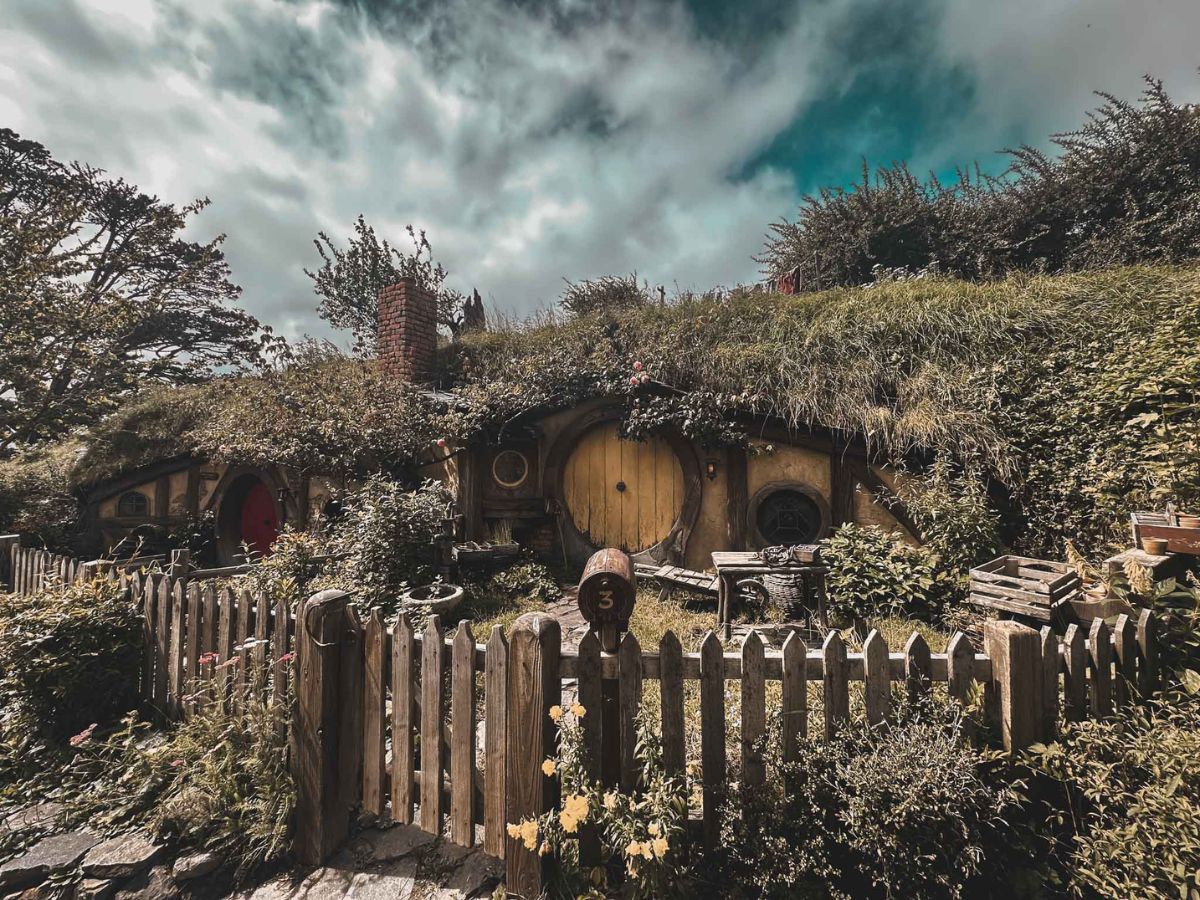
Naturally, if there is any element from the world of The Lord of the Rings that warmly offers a bright contrast to the darkness of Mordor, it would be the hobbits. It goes without saying that these silly, whimsical creatures highlight a very different approach to life.
Their goofy, lighthearted temperament is seen throughout the series. From their witty jests, jovial parties, and love of comfort, it’s not hard to admire how their values lean more toward a good-natured, peace-loving way of being.
With zero ambition for world domination, these innocent characters seemingly prefer the often-overlooked ordinary things, which include a rustic setting, a good meal, and the joy of great company to share it with. Of course, these choices go back to Tolkien’s anti-materialist views and his efforts to draw attention to the Shire—the idyllic life you could only attain by protecting the planet and refusing to treat the natural world as mere resources.
Yet Tolkien’s world is not divided between different kinds of people so much as different tendencies within all of us, each emerging depending on circumstance and awareness. This also ties back to my interpretation of the kind of outcomes that emerge from the human mind at work—particularly those shaped by imagination, intuition, and felt understanding.
In A Whole New Mind, Daniel Pink dives deep into the kind of abilities that are becoming increasingly valuable in an era of automation and abundance—the beginning of what he calls the Conceptual Age. These key skills include design, story, symphony, empathy, play, and meaning.
I never would have guessed this, and it seems absurd now, but how much more obvious could it be? The hobbits present each of these qualities in clear display through their enthusiasm and fondness for sensory experiences and the same everyday simple pleasures that are always available to us.
So, however we choose to activate these skills in our lives, perhaps we could draw more inspiration from these ludicrous little beings than we might realize. Victor Hugo once wrote:
“Nothing is more powerful than an idea whose time has come.”
Ring of Power
It’s crazy because when I look back and think about my first impression of Tolkien’s epic masterpiece, it makes sense why I found the whole idea so intense. But in retrospect, I don’t think it was for obvious reasons.
I mean, sure—anyone could argue that a jumping image of a raging orc with a botched-up face is reason enough. Still, that’s not what I mean.
Maybe it took me reaching a certain age to put my finger on it because, more than the familiar theme of good versus evil, I must admit: I now see a pattern.
To me, it resembles an ongoing moving cycle of people stuck in a loop, caught up between the frailty of the unconscious mind (the source of fear and scarcity) and the higher self (the source of joy and abundance); human versus being; ego versus soul, moving in an ongoing circle like a ring until a new order can finally emerge.
It’s as if a fellowship is called for and one founded on shattering the rigid illusions of separateness, the boxes of identity that only keep us insensibly repeating the outdated rhythms of the past.
So that when this finally happens, we might actually do something different. We might actually break the mold and finally get creative, integrating ideas in a holistic way with a whole new mind.
This brings me back to how I first felt watching the films. I mean, the idea of people finally putting their “differences” aside to save themselves, and ultimately, change the course of history? Of course it’s intense, and it’s also powerful.
But more than anything, what I find most strikingly beautiful of all is that the story brings to bear a different kind of power—a quiet strength found not in the toughness of character we’ve come to respect, but in the soft contentment of those we’d never even bother to expect.